
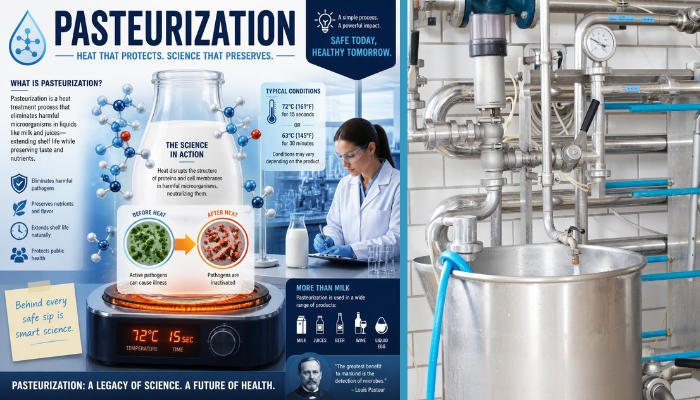

Have you ever wondered why the milk in your refrigerator stays fresh for days, or how your favorite juice can sit on a shelf without spoiling? The answer lies in a brilliant scientific process called pasteurization.
Pasteurization is a heat treatment method that kills harmful bacteria, viruses, and other microorganisms in food and beverages. Named after the French scientist Louis Pasteur, this technique has saved countless lives since its development in the 1860s. Today, it remains one of the most important food safety measures worldwide.
The process works by heating liquids or foods to specific temperatures for predetermined periods. This careful balance destroys dangerous pathogens without significantly affecting the taste, nutritional value, or quality of the product. From the milk in your morning coffee to the beer you enjoy with friends, pasteurization plays a silent but crucial role in modern food safety.
Understanding pasteurization helps us appreciate the science behind our food choices and makes us better-informed consumers. Let’s explore this fascinating process in detail.
The Fascinating History of Pasteurization
Louis Pasteur didn’t set out to revolutionize food safety. In 1864, he was actually trying to solve a problem for French winemakers whose products kept spoiling. Through careful experimentation, Pasteur discovered that heating wine to about 50-60°C killed the bacteria responsible for turning it sour.
This discovery changed everything. Pasteur realized his method could work for other beverages and foods. By the 1880s, German chemist Franz von Soxhlet proposed using the technique for milk, which was a common source of diseases like tuberculosis, typhoid fever, and diphtheria at the time.
The early 20th century saw widespread adoption of milk pasteurization in developed countries. Despite initial resistance from some dairy farmers and consumers, public health officials championed the process. By the 1950s, pasteurized milk became the standard in most Western nations.
Today, pasteurization extends far beyond milk and wine. We use it for fruit juices, beer, canned foods, dairy products, eggs, nuts, and even honey. This simple yet powerful technique has prevented millions of foodborne illnesses and transformed how we produce, distribute, and consume food.
Different Types of Pasteurization Methods
Not all pasteurization is created equal. Scientists have developed various methods tailored to different products and purposes. Each technique balances safety, quality, and efficiency in unique ways.
High-Temperature Short-Time (HTST) Pasteurization is the most common method for milk. The liquid flows continuously through heated metal plates at 72°C for 15 seconds. This quick process kills harmful bacteria while preserving taste and nutrients. Most commercially available milk undergoes HTST treatment.
Ultra-High Temperature (UHT) Pasteurization takes things further by heating products to 135-150°C for just 2-5 seconds. This aggressive treatment allows milk and juices to be stored at room temperature for months without refrigeration. UHT products have a slightly different taste but offer incredible convenience.
Low-Temperature Long-Time (LTLT) Pasteurization, also called batch pasteurization, heats products to 63°C and holds them there for 30 minutes. Smaller dairy operations and specialty producers often prefer this gentler method, which some believe better preserves flavor.
Flash Pasteurization involves extremely rapid heating and cooling. This method works particularly well for beverages like beer and wine, where maintaining original flavors is paramount.
Each method has specific applications based on the product, desired shelf life, and distribution requirements. Food scientists continue refining these techniques to maximize both safety and quality.
How Pasteurization Protects Your Health
The primary purpose of pasteurization is straightforward: keeping you safe from harmful microorganisms. But the specifics of how it accomplishes this are genuinely fascinating.
Pathogenic bacteria like Salmonella, E. coli, Listeria, and Campylobacter can cause serious illness or even death, especially in children, elderly people, and those with weakened immune systems. These microorganisms thrive in raw milk, unpasteurized juices, and other untreated foods.
Heat disrupts the cellular structure of these bacteria. When temperatures rise, the proteins in bacterial cells begin to denature, essentially falling apart. The microorganisms can’t maintain their vital functions and die. The key is finding the right temperature and time combination that eliminates pathogens without cooking the food.
Studies consistently show the effectiveness of pasteurization. Before widespread milk pasteurization, dairy products caused roughly 25% of all foodborne illness outbreaks in the United States. After pasteurization became standard, this number dropped dramatically.
The Centers for Disease Control and Prevention estimates that pasteurization prevents approximately 800,000 illnesses and 900 deaths annually in the United States alone. These numbers represent real people, real families, and real communities protected by this simple scientific process.
Beyond bacteria, pasteurization also inactivates enzymes that cause food spoilage. This dual action extends shelf life while maintaining safety, reducing food waste and improving food security worldwide.
The Nutritional Truth About Pasteurized Foods
A common concern about pasteurization involves nutrition. Does heating food destroy vitamins and minerals? The answer is more nuanced than you might think.
Pasteurization does cause some nutrient loss, but it’s typically minimal. Vitamin C, being heat-sensitive, experiences the most significant reduction, with losses ranging from 10-25% depending on the method used. However, most dairy products aren’t primary vitamin C sources anyway.
The good news is that most nutrients remain stable during pasteurization. Calcium, protein, and most B vitamins in milk survive the process virtually intact. The nutritional profile of pasteurized milk closely resembles raw milk, with negligible differences for most vitamins and minerals.
Fat-soluble vitamins like A and D also withstand pasteurization well. Since many countries require vitamin D fortification of milk, pasteurized milk often contains more of this important nutrient than raw alternatives.
When we compare the slight nutrient reduction against the significant health risks of unpasteurized products, the choice becomes clear. The minimal nutritional impact is a worthwhile trade-off for dramatic improvements in food safety.
Furthermore, modern pasteurization techniques continue improving. Lower-temperature methods and shorter processing times help preserve even more nutrients while maintaining safety standards. Food scientists work constantly to optimize this balance.
Pasteurization in the Modern Food Industry
Walk through any supermarket, and you’ll encounter dozens of pasteurized products. The food industry relies heavily on this process to deliver safe products to consumers worldwide.
The dairy industry represents the largest user of pasteurization technology. Beyond fluid milk, producers pasteurize cream, yogurt, cheese, ice cream, and butter. Each product requires specific temperature and time parameters to achieve optimal results.
The beverage industry also depends on pasteurization. Fruit juices, particularly orange juice, undergo treatment to eliminate harmful bacteria while preserving fresh flavor. Even alcoholic beverages like beer and wine often receive gentle pasteurization to extend shelf life without affecting taste.
Egg products present unique challenges. While shell eggs typically aren’t pasteurized, liquid eggs used in food service and manufacturing undergo treatment to eliminate Salmonella. This innovation has made products like cookie dough and Caesar dressing safer.
The honey industry uses pasteurization to prevent crystallization and eliminate yeast that could cause fermentation. Nut butter manufacturers pasteurize almonds and other nuts to reduce Salmonella risk following several serious outbreaks.
Recent innovations include pasteurizing ready-to-eat meals, soups, and sauces. High-pressure pasteurization, which uses extreme pressure instead of heat, is emerging as an alternative for products where heat might cause undesirable changes.
The global pasteurization equipment market continues growing, driven by increasing food safety regulations and consumer awareness. This trend suggests pasteurization will remain central to food production for decades to come.
Common Myths and Misconceptions About Pasteurization
Despite its proven benefits, pasteurization faces ongoing criticism based on misconceptions. Let’s address some common myths with scientific facts.
Myth: Raw milk is healthier than pasteurized milk. The evidence doesn’t support this claim. While raw milk advocates point to enzymes and beneficial bacteria, research shows pasteurized milk provides equivalent nutrition with dramatically lower health risks. The beneficial bacteria in raw milk don’t survive stomach acid anyway.
Myth: Pasteurization creates harmful compounds. Some people worry that heating creates dangerous substances. However, the temperatures and times used in pasteurization are far too mild to generate harmful compounds. The process is significantly gentler than cooking.
Myth: Pasteurized milk causes lactose intolerance. Lactose intolerance results from insufficient lactase enzyme production in the body, not from pasteurization. Pasteurization doesn’t alter milk’s lactose content or structure.
Myth: Our ancestors drank raw milk without problems. Historical records tell a different story. Before pasteurization, milk-borne diseases were common and deadly. Infant mortality rates dropped significantly after pasteurization became widespread.
Myth: Pasteurization is only necessary because of dirty farming practices. Even the cleanest farms can’t guarantee pathogen-free milk. Bacteria occur naturally in environments where animals live. Pasteurization provides a critical safety barrier regardless of farm cleanliness.
Understanding these facts helps consumers make informed decisions based on science rather than misinformation.
The Future of Pasteurization Technology
Science never stands still, and pasteurization technology continues evolving. Researchers are developing innovative approaches that promise even better results.
High-Pressure Processing (HPP) uses extreme pressure instead of heat to kill microorganisms. Products treated with HPP retain more nutrients and fresh flavor characteristics. This “cold pasteurization” is becoming popular for juices, guacamole, and ready-to-eat meats.
Pulsed Electric Field (PEF) Technology sends short bursts of electricity through liquid foods, disrupting bacterial cell membranes. This method works at lower temperatures, preserving heat-sensitive nutrients and flavors better than conventional pasteurization.
Ultraviolet (UV) Light Treatment exposes liquids to UV radiation, which damages bacterial DNA and prevents reproduction. This chemical-free approach shows promise for treating beverages and liquid foods.
Microwave Pasteurization heats products more uniformly and rapidly than conventional methods. This technique reduces processing time and may better preserve quality attributes.
Researchers are also refining traditional methods. Smart sensors and artificial intelligence help optimize temperature and time parameters for specific products. These precision approaches minimize quality changes while maximizing safety.
As global populations grow and food distribution networks expand, effective pasteurization becomes increasingly important. These emerging technologies will help meet future demands while maintaining the highest safety standards.
The fundamental principle Louis Pasteur discovered over 150 years ago remains as relevant today as ever. Heat kills harmful microorganisms, making food safer for everyone. Modern innovations simply make this process more efficient, effective, and suitable for diverse applications.
Pasteurization represents one of humanity’s greatest public health achievements. This elegant scientific process protects billions of people daily from foodborne illnesses while preserving the nutritional value and quality of countless products.
From its origins in French wine cellars to modern high-tech food processing facilities, pasteurization has continuously evolved and improved. Today’s consumers benefit from safer, longer-lasting products without sacrificing taste or nutrition.
Understanding pasteurization empowers us as consumers. We can appreciate the science protecting our families while making informed choices about the foods we buy. Whether you’re pouring morning milk, enjoying fresh juice, or spreading honey on toast, you’re experiencing the benefits of this remarkable process.
The future promises even better pasteurization technologies that will further enhance food safety and quality. As these innovations develop, the core mission remains unchanged: protecting public health through sound science and careful application.
Next time you reach for a pasteurized product, take a moment to appreciate the invisible shield of safety it provides. That’s the quiet brilliance of pasteurization at work.
Read also: Contact Dream Meaning: Your Guide to Dream Interpretation